About 100TH FILM
Filmmakerʻs Statement
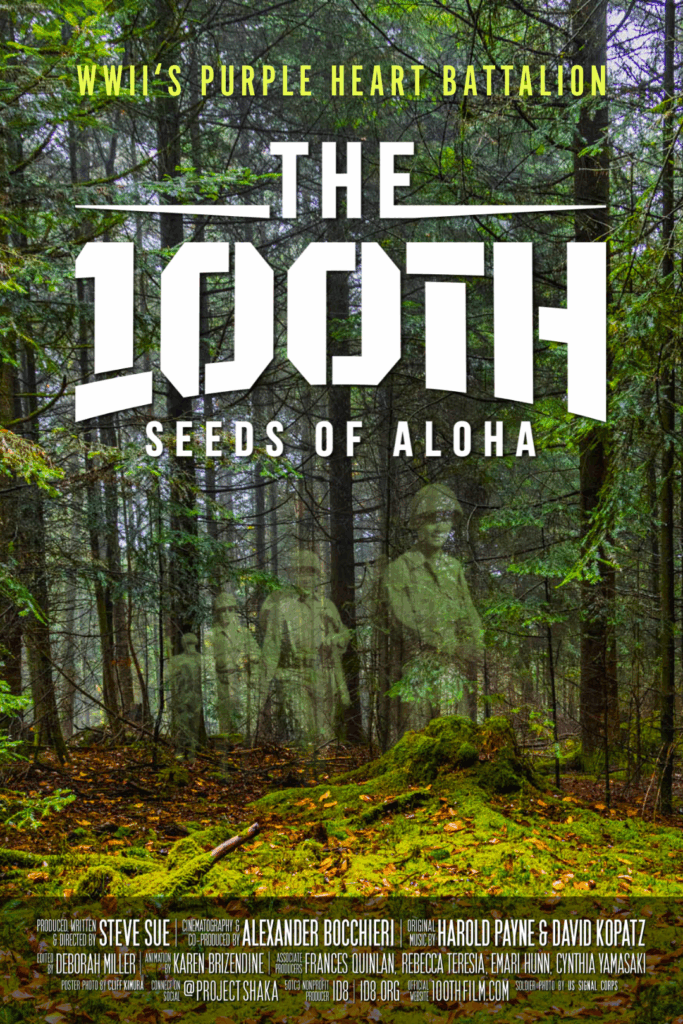
THE 100TH, Seeds of Aloha is a feature-length documentary about the extraordinary men of Hawaiʻi’s 100th Infantry Battalion and 442nd Regimental Combat Team, whose courage and sacrifice carried them from a nation that questioned their loyalty to some of the fiercest battlefields of World War II. The 100th suffered such devastating casualties that war correspondents called it the “Purple Heart Battalion.” Together, these Americans of Japanese ancestry (AJAs) became part of one of the most decorated units in U.S. military history.
But this isn’t simply a story about war.
It is a story about what these men carried into war—and what they brought home.
Coming off SHAKA, A Story of Aloha, I wasn’t looking to make a war film. In fact, I didn’t think I was the right person to tell one. But several veterans kept after me. They believed their story had never been adequately told and that important parts of it were still misunderstood or missing.
Eventually, I started poking around.
The more I learned, the more intrigued I became. I spoke with veterans, descendants, historians and military experts. I read their letters and listened to their stories.
Eventually, I waved the white flag.
The vets were right.
What I discovered was an extraordinary American story—but also a profoundly Hawaiʻi story.
These young men stood at the center of an extraordinary contradiction. America was fighting the tyranny of Nazi Germany and Imperial Japan while struggling with racism, prejudice and incarceration at home. Their ancestry caused their loyalty to be questioned by the very country they were prepared to defend.
Yet the veterans repeatedly told us something important: they did not go to war to prove they were Americans. They already knew they were Americans.
They served because it was their country, too.
And they carried values learned at home with them: loyalty, humility, service, caring for one another and a willingness to sacrifice for something larger than themselves. We recognize many of those values today as expressions of the spirit of aloha.
That became the film I wanted to make.
Rather than simply recount battles, I wanted to understand what drove these men to do what they did, what survived the war—and what happened to that spirit after they came home.
Our journey took us back across the battlefields of Italy and France and into Germany, where the 522nd Field Artillery Battalion advanced in the final months of the war. Something unexpected kept surfacing.
Aloha.
In communities liberated more than 80 years ago, people still remember the 100th/442nd as “The Hawaiians.” Families still tell their stories. Friendships formed during war have survived generations. A lost class ring can reconnect families across an ocean. A Christmas celebration for children can remain in a village’s memory. Soldiers whose own families had experienced incarceration could find themselves helping survivors of Nazi persecution.
Amid humanity at its worst, we kept finding evidence of humanity at its best.
Small seeds of giving had survived the war.
Then we discovered that the men came home and planted even more.
They educated themselves, built businesses and institutions, supported the families of fallen comrades, served their communities and fought discrimination. Veterans and the generations they inspired became educators, business and community leaders, judges and elected officials. Some entered the very institutions of government that had once questioned their loyalty and helped transform Hawaiʻi’s civic and political landscape. Others reached back across the Pacific through relief and reconciliation.
Men who had witnessed some of humanity’s worst moments devoted much of the rest of their lives to building something better.
That is why we call the film Seeds of Aloha.
The title has come to mean something deeper to me as we have made the film. These men carried aloha into war, planted it through their actions and human connections, then cultivated those seeds through more than eight decades of service.
Their story also led me to a larger idea that now sits at the heart of the film:
A country can fall short of its ideals while its people still choose to embody them.
The men of the 100th/442nd did more than fight for America as it was. Through their courage during the war and their service afterward, they helped demonstrate what America could become.
The challenge in telling this story has been enormous. Eight decades of history are filled with differing memories, incomplete records and stories that have sometimes been simplified through repeated telling. From the beginning, our priority has been to listen—to veterans, families, military experts, historians and the communities in Europe that still preserve this history.
We have approached the film with an open door and an open mind: research deeply, record what we can, invite scrutiny and keep refining the story as new information emerges. It has taken an extraordinary community—veterans, descendants, historians, military experts, organizations, nonprofits, government agencies and community members—to help us tell it with the accuracy, nuance and reverence these men deserve.
I am profoundly grateful for that trust.
I am equally grateful for the remarkable team of artists who have worked tirelessly and collaboratively on this project, led by cinematographer Alexander Bocchieri, editor Deborah Miller, music directors Harold Payne and David Kopatz, and animator Karen Brizendine. Associate producers and ID8 Board Members Cynthia Yamasaki, Emari Hunn, Rebecca Teresia, Johanna Tokunaga and Frances Quinlan have been integral to the journey. Frances is also the lead vocalist on “Eyes of a Friend,” joined among our featured vocalists by Brian Yamamoto and Kristle Kay Louis Backe.
Music itself became an important part of how we tell this story. During our journey through Europe, Harold Payne and David Kopatz composed 18 original songs inspired by the people, places and stories we encountered. The music gives us another way to explore not simply what happened to these men, but what their experiences meant.
More than 80 years after the war, I believe the time is right to tell this story not only with reverence and gratitude, but with an eye toward healing.
The veterans taught us something remarkably relevant to the world today. Even in a time defined by fear, prejudice, division and war, people can choose courage over fear, service over self-interest, connection over division and aloha over hatred.
Their story ultimately leaves me with two questions:
What survives war?
What do we do when our country falls short of the ideals we still believe in?
The lives of these men offer an extraordinary answer:
Embody those ideals—and work to make them real.
Near the ends of their lives, some veterans wondered whether their stories would disappear with them.
I’m honored to help make sure they don’t.
But remembering them is only the beginning. The larger question is what we choose to do with what they left us.
Their courage is our inheritance. Their aloha is now our responsibility.
My hope is that THE 100TH, Seeds of Aloha helps ensure that the seeds they planted continue to grow for generations to come.
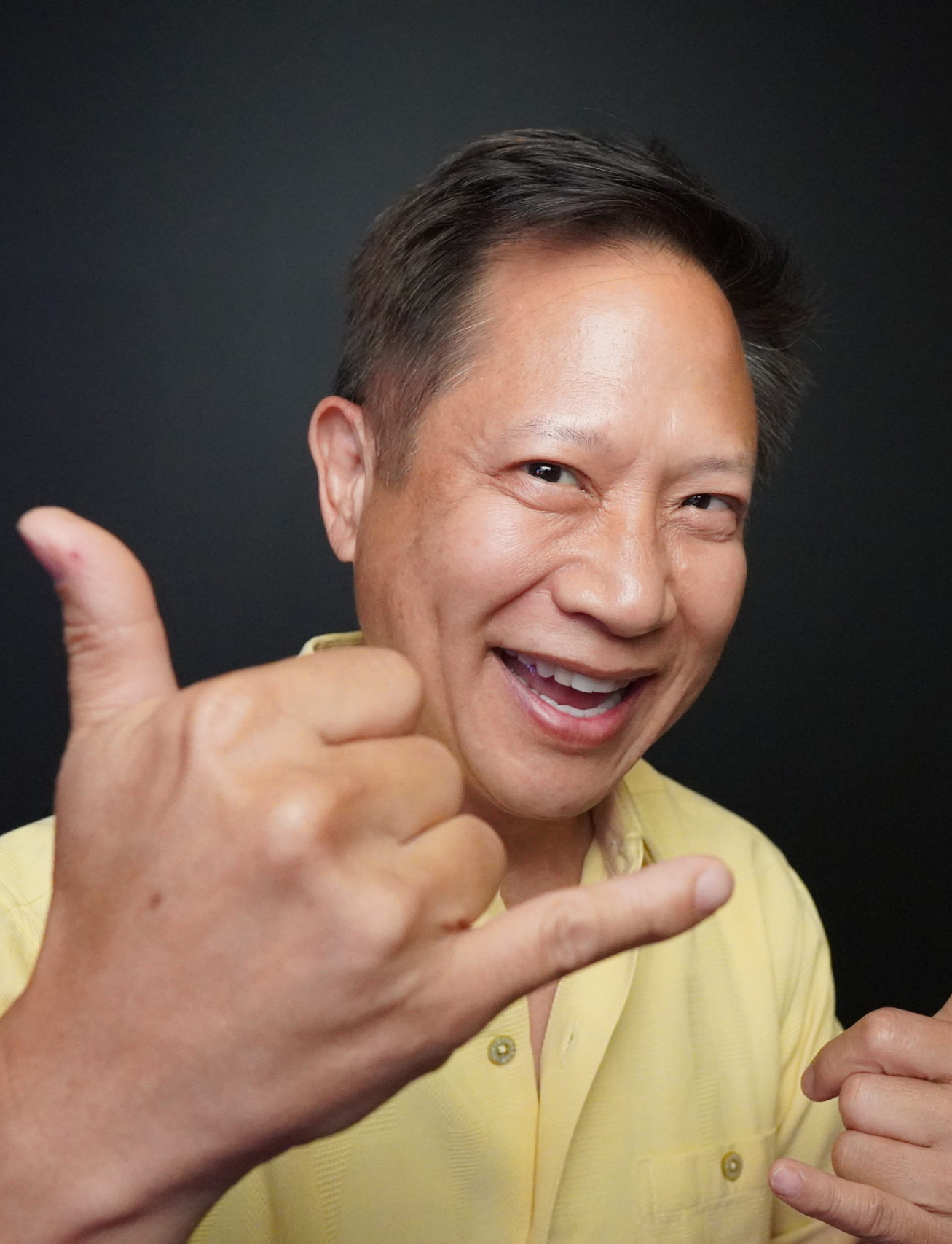
Steve Sue, Producer/Writer/Director THE 100TH, Seeds of Aloha & ID8 Chair
ID8 is a Hawai’i 501C3 nonprofit dedicated to empowering the world to flourish through great ideas. Key programs include Global Aloha, a movement to empower acts of aloha.

THE 100TH, Seeds of Aloha is part of the Global Aloha film series. See the first film, SHAKA, A Story of Aloha »
TAKE ACTION
Help the world see THE 100TH. DONATIONS 100% TAX DEDUCTIBLE See Use of Funds » | Donor Wall »
Venmo, PayPal, CC/Debit or Check:
DONATE
Donations are tax deductible. Donate by Venmo, the credit card form below or manual check. Credit card donors will receive a tax deduction letter. Please consult a financial advisor for tax advice. Make checks payable to "ID8" and mail to 1012 18th Ave. Honolulu, HI, 96816 or by credit card:
CORP. SPONSORS
Sponsorships are tax deductible. Sponsors will receive a tax deduction letter. Please consult a financial advisor for tax advice. Donate by check payable to "ID8" and mail to 1012 18th Ave. Honolulu, HI, 96816 or by credit card:
| Sheet | Amount | Comments |
|---|---|---|
| Total Donation from Web Donars List | 362633 | |
| Total Donation from Donors Under $100 List | 245 | |
| Total Sponsor Amount from Web Sponsors List | #REF! | |
| Total Fund Raise | 362878 | |
| Percentage of Total Funds Raised | 72.58% | This shows how much we’ve raised so far as a percentage of our $500,000 fundraising goal. |
- $500K Fundraising Goal 0.1%